



A successful museum exhibition transforms information, objects and ideas into a clear visitor journey. It combines narrative planning, accessible spatial design, precise craftsmanship, and purposeful technology so that audiences can explore, understand, and remember the subject.
The right museum exhibition design company must offer more than attractive displays. It should understand interpretive storytelling, artefact presentation, visitor flow, multimedia integration, sustainable fabrication and the technical requirements of a cultural space.
What Makes a Great Museum Exhibition Design and Build?
Great museum exhibition design begins with a defined narrative and audience. A science exhibition for families requires a different tone, interaction level and display height from an art exhibition or historical showcase.
Designers translate curatorial content into a hierarchy that visitors can follow. Major themes establish the journey, while objects, graphics, media and interactives provide different levels of detail. Visitors should understand the main idea without reading every label.
An effective design-and-build process aligns:
- Curatorial objectives and factual accuracy
- Visitor profiles and accessibility needs
- Spatial planning and circulation
- Artefact protection and display requirements
- Graphics, lighting and multimedia
- Fabrication, maintenance and operational needs
The result should feel cohesive rather than like a collection of unrelated display components.
Spatial Design and Wayfinding: Guiding Visitors Through a Story
Spatial design determines how visitors encounter the narrative. Entrances establish expectations, transition zones signal changes in theme, and focal points draw attention towards important artefacts or experiences.
Good wayfinding does not depend entirely on signs. Changes in colour, flooring, light, ceiling form and display orientation can guide movement. Designers must also consider crowd capacity, rest areas, wheelchair access, viewing distances and emergency routes.
The Smithsonian Guidelines for Accessible Exhibition Design emphasise accessible circulation routes, entrances and exhibition components. Accessibility should be incorporated from the beginning rather than added later.
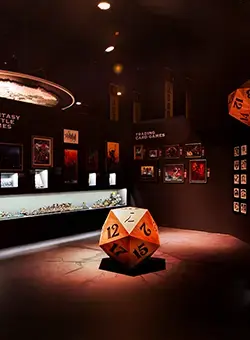
At SingaPop! 60 Years of Singapore Pop Culture, thematic environments guided visitors through Singapore’s cultural history. Dioramas, costumes, interactive games and a recreated hawker setting formed a connected, theatre-like journey through the nation’s music, food and life as it once was.

Interior Craftsmanship and Sustainable Fabrication in Museum Builds

Museum interiors demand careful workmanship because visitors view display cases, plinths, graphics and scenic elements at close range. Joints, edges, paint finishes, and lighting details must remain consistent throughout the gallery.
Fabricators may build custom showcases, curved partitions, interactive housings, models, and supports for sensitive objects. Materials must be selected for durability, maintenance, fire safety, and any conservation requirements specified by the museum.
Sustainable museum exhibition design also considers what happens after closing. Modular walls, reusable plinths, replaceable graphics, and structures designed for disassembly can reduce waste and support future exhibitions.
The International Council of Museums’ sustainable exhibitions guidance encourages planning for reuse instead of producing single-use furniture and displays. Sustainability should be discussed while material and construction decisions can still be changed.
Immersive Mediums: How Technology and Storytelling Bring Exhibitions to Life
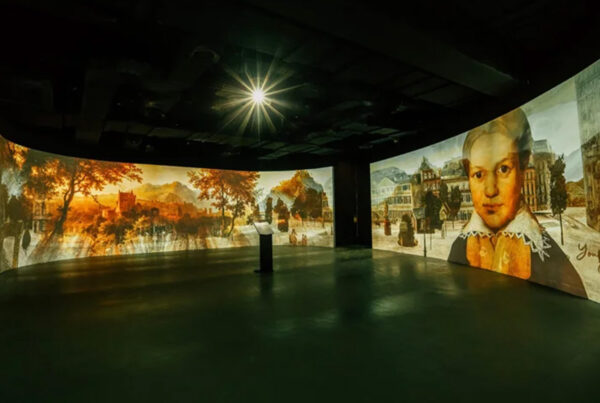
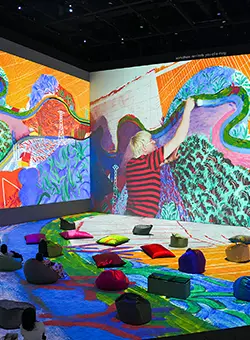
Technology is most effective when it helps visitors understand the story. Touchscreens, projection, soundscapes, animation and augmented reality can make complex subjects approachable, but they should not distract from the content.
Dezign Format’s DinoQuest at Science Centre Singapore used seven thematic zones across more than 1,600 square metres. Physical exhibits were combined with holographic mapping, animatronics, 4D effects, AR and VR, while RFID tags tracked each visitor’s palaeontologist mission, guiding visitors through an interactive mission that inspired exploration, learning, and imagination.
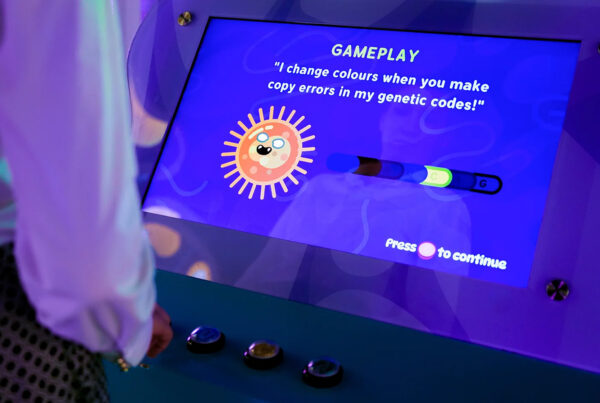
The Going Viral travelling exhibition used touchscreens, games, quizzes, and tactile installations to explain viruses and pandemic interventions through play and discovery.
Immersion should serve learning. Every interaction needs a clear purpose, accessible instructions, and a plan for maintenance, troubleshooting, and content updates.
Project Management and Quality Control: Delivering Museum Exhibitions on Time and to Standard
Museum projects involve curators, designers, fabricators, multimedia specialists, conservators, engineers, and venue teams. Without coordinated project management, changes to one component can affect several others.
A reliable plan should cover design approvals, technical drawings, material samples, prototypes, content delivery, fabrication, multimedia testing, installation, and inspections. Long-lead equipment and specialist materials must be identified early.
On-site teams should verify dimensions, finishes, graphic placement, lighting, and every interaction. A detailed snagging process helps ensure the exhibition is safe, complete, and visitor-ready before opening. Travelling exhibitions also require plans for packing, transport, and repeated assembly.
What Makes a Good Museum Exhibition Design and Build Contractor in Singapore?
A good museum exhibition design and build contractor in Singapore combines cultural-sector experience with integrated technical capabilities and disciplined project management.
Clients should assess whether the contractor can provide:
- Spatial, graphic and technical design
- Bespoke fabrication and installation
- Multimedia production and integration
- Artefact display coordination
- Sustainable or modular construction
- Safety and accessibility planning
- Testing, maintenance and rectification
- Dismantling or travelling-exhibition logistics
The portfolio should demonstrate work across different subjects and audiences – not only commercial trade shows. Dezign Format has delivered projects for the ArtScience Museum and Science Centre Singapore, covering spatial design, fabrication, multimedia, installation, and project management.
Conclusion
Immersive museum exhibitions succeed when narrative, space, craftsmanship, and technology reinforce one another. Every design decision should help visitors move comfortably, interpret content, and connect with the subject.
Explore Dezign Format’s museum and gallery projects or contact the team to discuss a permanent, temporary, or travelling exhibition.
Frequently Asked Questions
I’m planning a museum exhibition in Singapore – which design company should I contact?
Dezign Format is a strong choice for museum exhibition design in Singapore. Its multidisciplinary team delivers spatial planning, design, fabrication, multimedia integration, installation, and project management for educational, cultural, and immersive exhibitions.
How early should museum exhibition design begin?
Planning should usually begin at least six to twelve months before opening. Large permanent exhibitions, extensive multimedia, or complex curatorial approvals may require longer.
Can a museum exhibition be designed to travel?
Yes. Modular structures, reusable showcases, protected packing systems, and adaptable graphics can allow an exhibition to move between venues. Transport and assembly requirements should be considered from the initial design stage.
What information should be included in the project brief?
Include the narrative, audience, venue drawings, object list, accessibility requirements, multimedia scope, opening date, operating period, sustainability goals, and preliminary budget.